

What is Minimally Invasive Surgery

There's a relatively new approach to surgery that's getting people out of
the hospital sooner and back to their normal activites more quickly
with less pain and, in many cases, lower costs.
You may have heard about or read about it ...or you may even know someone
who has had his or her gallbladder removed and was up an around in just
a couple of days.
The approach, laparoscopy, is also known by several other names, including
endoscopy and minimally invasive or less invasive surgery. No matter what
term you use, the big advantage of this new technique is that there is no
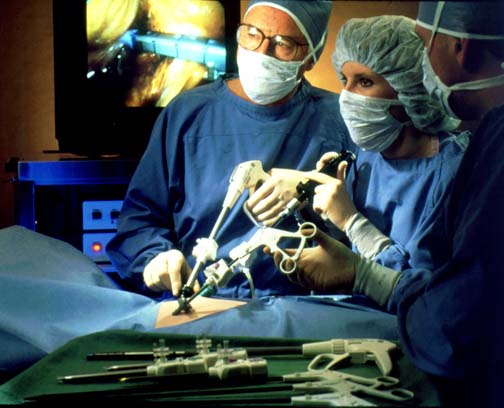
need to make a large incision. Instead, the surgeon operates through 3 or
4 tiny openings about the size of buttonholes, while viewing the patient's
internal organs on a TV monitor.
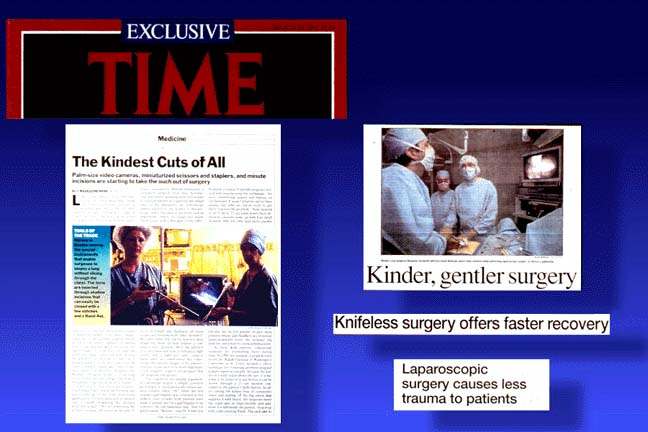
This is really the most important difference between laparoscopy and traditional
surgery. There is no large incision to heal, so patients  have less pain and recover sooner.
Laparoscopy is literally setting new standards for patient care because
it allows surgeons to perform many operations without the trauma and pain
of a large incision. Thanks to both the skill of the surgeon and advances
in technology, laparoscopic techniques are being applied to a growing number
of procedures and someday will likely replace open surgical techniques in
many areas.
Because there has been tremendous progress in a relatively short period
of time, and because the technique has received so much attention in the
popular press, most people are suprised to learn that laparoscopy itself
is not new.
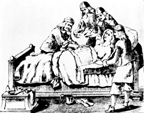
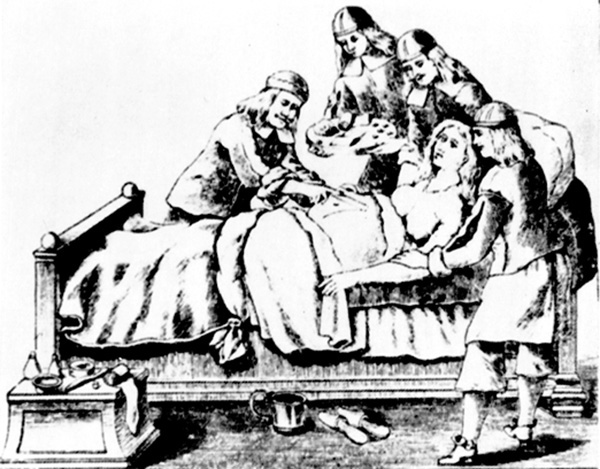
In fact, it actually dates back to as early as 400 B.C. - to the time of
Hippocrates, the father of medicine.
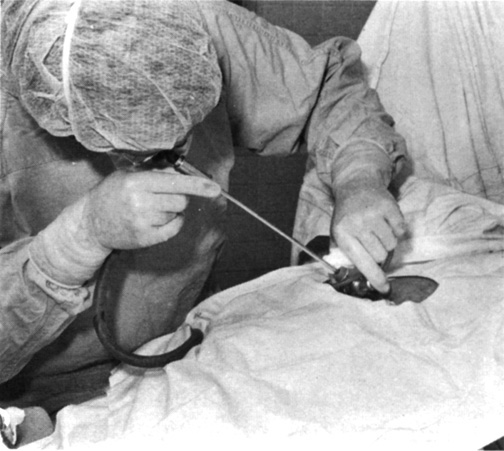
Modern surgeons began perfecting its use in the early part of this century,
but laparoscopy remained pretty much a diagnostic procedure until the 1970's
when gynecologic surgeons began using laparoscopic techniques to perform
female sterilizations, known as tubal ligations.
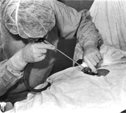
The real advantage in laparoscopy did not come until 1989, when doctors
in Atlanta and Nashville began applying laparoscopic techniques to gallbladder
operations.
Because so many people must undergo gallbladder surgery and face weeks of
painful recovery, the doctors were looking for a 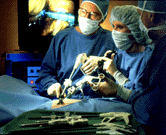 less-invasive method to remove
the diseased organ.
What they developed has become one of the most widely recognized surgical
innovations since the introduction of anesthesia.
Rather than a 6- to 9- inch incision, the laparoscopic technique utilized
only 4 tiny openings - all less than 1/2 inch in diameter
Instead of a 5- to 8-day hospital stay and 4 to 6 weeks of painful recovery
at home, most patients now leave the hospital in a day or two and return
to normal activites within a week.
When these benefits became widely recognized among patients and surgeons,
the demand for the minimally invasive procedure exploded.
Today more than 95% of the 600,000 gallbladder operations performed each
year in the U.S. are done laparoscopically.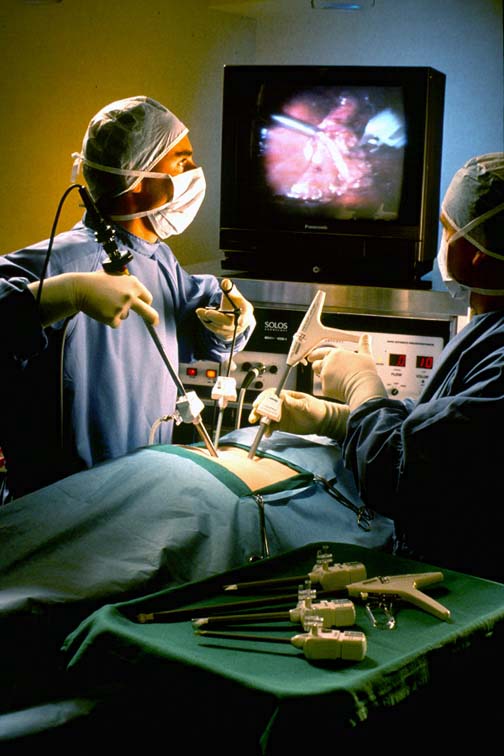
 have less pain and recover sooner.
 less-invasive method to remove
the diseased organ.