Part IV
KEY STRATEGIC INITIATIVES
There are several strategies that the hospital and its individual departments may choose to pursue to prepare for managed care...
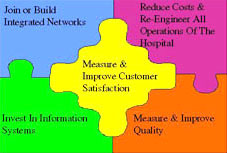
In order to meet the demands of the changing healthcare market and attract managed care contracts, the hospital should pursue a number of key strategic initiatives at both the organizational and departmental level. It is only through the coordination of all individual departments that success can be achieved. Some of these strategies include:
Perioperative nurses can influence any one or preferably all of these key strategic initiatives.
Let's review each one of these strategies individually.
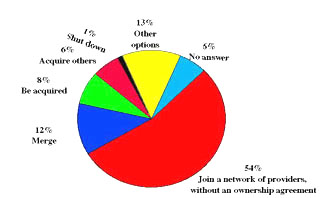
An increasing number of hospitals are developing partnerships through integration. The types of integration taking place are happening in response to growing pressures within the local markets. 81% of hospitals surveyed say they will not operate as stand-alone institutions within five years.
Integration
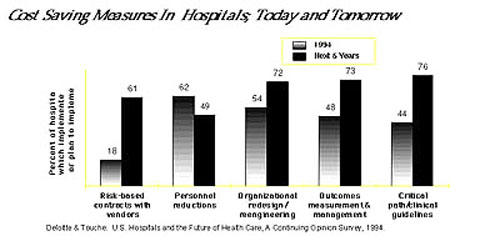
In response to pressures in the marketplace, hospitals have been focused on reducing their costs and re-engineering their organizations to operate more efficiently. Managed care organizations are impressed by such efforts. 97% of Deloitte & Touche hospital survey respondents say they have begun cost saving measures through re-engineering individual hospital departments so they can cross departmental boundaries and reach system-wide objectives through teamwork.
Reduce System-wide Costs
Re-engineering the hospital focuses on moving from functional organizational structures to a process oriented method of operation. Some hospitals no longer have distinct functional operations such as nursing, administration, purchasing, and finance. With re-engineering, these once-distinct groups come together and work cross-functionally to accomplish certain performance objectives. With re-engineering, hospitals identify their key business processes, and organize teams around those processes.
One way that hospitals are cutting costs and raising quality is through the development of clinical practice guidelines. Developing and implementing guidelines will also help a hospital get a grasp on the activities of its staff and physicians. Guidelines can help curtail costly variations in practice and get rid of inappropriate procedures through benchmarking the best clinical practices.
Information Systems
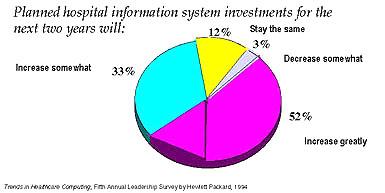
Information systems can help a hospital handle the complexities of its operations and manage its numerous contracts. A hospital signs a great number and variety of contracts. Each contract has a specific per diem, per procedure, or other payment terms. Within each contract, negotiators break out exceptions for costly devices or lengthy hospital stays, and payers make their own risk adjustments.
The hospital must manage not only the contracts and variety of contract terms, but also the patients covered under these plans. Also, the hospital must perform outcomes measurement and utilization review.
Information systems need to be developed to help the hospital manage the complexities of the data gathering and measuring processes to help the hospital:
Quality
Quality goes hand-in-hand with value- delivering appropriate care in a cost effective manner.
If a hospital is successful at reducing its inpatient costs by cutting back on utilization of services, but patients repeatedly have to be re-admitted as a result of those cutbacks, the hospital has not succeeded in reducing total healthcare costs for that patient.
MCOs look for the total value that hospitals can provide, in addition to cost efficient operations. Therefore, a good part of the hospital's focus should be on maintaining or increasing quality of care in the midst of its attention to other issues.
Customer Satisfaction
Satisfaction Criteria For Managed Care Organizations:
Not only is quality of care important in creating value for healthcare dollars, but it has a tremendous effect on the customer's perception of the hospital. Customer satisfaction is extremely important to the hospital. Satisfied customers who evaluate services as being higher in quality are more likely to use those services again in the future. It has been found that patients also are more apt to comply with medical advice and treatment regimens and thus more likely to reach better health outcomes if they have a positive impression of the hospital.
In order to succeed, the hospital must understand its customers' needs and be flexible and willing to meet these needs. Managed care organizations are also considered customers of hospitals. Hospitals must understand the criteria that managed care organizations use to measure satisfaction. Patients and Managed Care Organizations will be more satisfied if the hospital meets the following criteria:
Nursing can have a significant impact on helping their hospitals pull the pieces of this puzzle together, especially in terms of reducing system-wide costs and preserving quality. A successful Hospital of the future will ensure that all the pieces of the puzzle come together by having:
Summary
Back to Table of Contents